Tuesday 31st March Update:
At present following the fire on Union Street some disruption remains however the clinic is open as usual with normal access to the building.
Advice is to check Network Rail updates for further updates however all platforms at Central Station High Level and Low level are operating since Wednesday 25th March. Also, Queen Street Station, the Subway and Hope Street and Bothwell Street bus routes are open as normal.
Many thanks, ChiroProActive

Blog
Book your appointment with ChiroProActive online Book Chiropractor
What does science say about chiropractic?
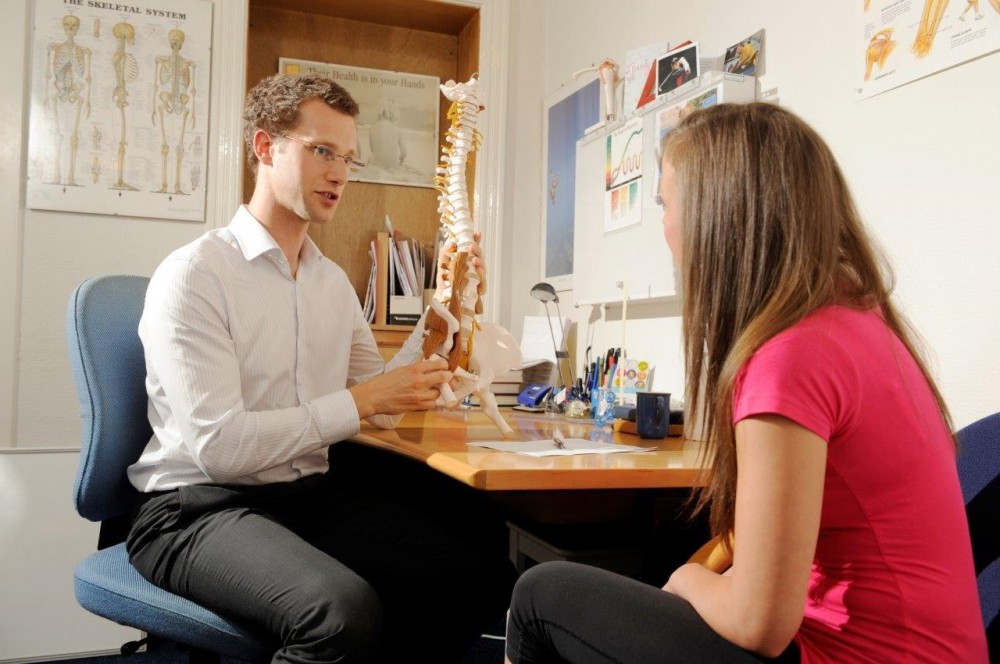
We are not talking about the treatment of a chiropractic adjustment in isolation here, although that will form part of this blog. Adjustments/manipulation alone would otherwise be called a modality or treatment tool, much as shockwave or sports taping, massage or exercise prescription would be a treatment tool or modality. Just as it would be unrealistic and inaccurate to describe physiotherapy as purely the prescription of exercises or historically medical rubbing, this also applies to chiropractic as a profession*.
It would be a significant error to provide every person attending a clinic with the same treatment regardless of their presenting condition and health history. At the outset therefore, if you've been attending somewhere and you have been receiving exactly the same treatment each time without making progress, then that should probably change, regardless of the profession; maybe have a conversation about it.
Back to the main point; What we are talking about by chiropractic, in the UK setting, is; biopsychosocially informed, patient centred care, addressing predominantly musculoskeletal pain presentations and their associated functional limitations using a combination of manual therapy techniques and active care prescription by a qualified regulated chiropractor.
To unpack that a little; Bio-psycho-socially informed means considering a persons wellbeing in the context of the physical, biological health, mental and social health and environment. The general understanding being that if we attempt to address a health issue without considering it in context then we are likely to have substandard and incomplete results. Back pain then, especially long-term back pain is a function, in part, of how metabolically healthy a person is, which has been shown to be predictive of back pain (1). It is also an interrelated function of mental stress (2). And mental health is significantly impacted by our social support networks. This complexity also goes some way towards explaining why back pain is the number one cause of years lost to disability worldwide (3).
Patient centred refers to the provision of care for the individual including their preferences, needs and individual goals rather than simply providing a sheet of one size fits resources. Unfortunately one-size fits approaches are common practiced internationally (3).
Musculoskeletal care refers to conditions that are related to pain and function of muscles, bones, joints and the nervous system interpretation of these. This is often referred to as neuromousculoskeletal care, which makes the word slightly more complicated, but more accurate. This also helps to define, in part, what we do not treat, such as cancer or infections, heart conditions or kidney problems for example.
Manual therapy techniques can include adjustments and manipulation which is what chiropractic has been most associated with, however it is important to clarify chiropractiic care is not and should not be considered as a 1-treatment type profession. For example, we also perform muscle release and massage techniques, western acupuncture, sports taping. It is again a combination of treatment approaches adapted for the individual and their preferences within scope of what is understood to be beneficial (4). Regardless of manual therapy technique however it must be stated that they can all be regarded as passive recovery treatment strategies and as such they will not on their own make a person stronger or more coordinated in the long term. This is in contrast to active treatment strategies such as core mobility and stability exercises or functional movements such as squats, lunges, pushes and pulls, which done with the right progression absolutely can improve strength, coordination and overflow into improving metabolic and mental health in the long term (5). The caveat with all of these is applying the right treatment at the right time depending on that person's capacities and preferences.
In this overview it may become apparent that there is a lot of overlap between chiropractic, osteopathy and physiotherapy, which there absolutely is if the practitioner is following evidence informed care. There may however be instances where the specialism of another practitioner and their professional development is better suited to providing care such as with post-operative care and severe muscle injuries falling within the scope more of physiotherapy care in the hospital and community settings. It is the responsibility of your practitioner to discuss this with you and advise you if this is the case.
*While social media populism may simplify the profession, we do unfortunately concede that the chiropractic profession as a whole continues to be divided between those that seek to retain perceived historical roots and focus almost exclusively on adjustments, and those that seek to follow progressive evidence based care and integrate emphasis with other modalities, including evolving pain science and rehabilitation. This is despite especially the latter being included with the provision and development of chiropractic care since it's history with B.J. Palmer.
1. Chen Yuyang; Association Between Systemic Immune-Inflammation Index and Low Back Pain in American Adults: Evidence From a Large Population-Based Study, https://doi.org/10.1002/ejp.70179
2. Aboushaar N and Serrano N (2024) The mutually reinforcing dynamics between pain and stress: mechanisms, impacts and management strategies. Front. Pain Res. 5:1445280. doi: 10.3389/fpain.2024.1445280
3. https://www.iasp-pain.org/resources/fact-sheets/low-back-pain/ accessed 16:58 GMT 05/02/2026
4. Orlando Conde-Vazquez, Jose Garcia-Cancela, Santiago Navarro-Ledesma, Leo Pruimboom: Review: The effectiveness of manual therapy in people with chronic non-specific low back pain: an umbrella review with meta-analysis Annals of Physical and Rehabilitation Medicine Volume 69, Issue 2, March 2026, 102049
5. Hart PD, Buck DJ. The effect of resistance training on health-related quality of life in older adults: Systematic review and meta-analysis. Health Promot Perspect. 2019;9(1):1-12. doi: 10.15171/hpp.2019.01.
Contact Us
Have you checked our FAQs page? You may find the answer you are looking for there.
Please read our Privacy Policy
Book Chiropractor


Registered in Scotland | Company Number: SC399248
Web Design Glasgow | valid xhtml | Privacy Policy | Terms of Service